Explainer · From the Owners
What we actually built
A hybrid biomechanical hardware-and-software ecosystem: a computer-vision movement assessment engine wired directly into a personalized athletic manufacturing pipeline.
The Digital Movement Engine
Computer vision (MediaPipe-class pose estimation) analyzes movement mechanics, joint angles, and bar paths to generate a structural integrity profile of the athlete.
The Forge / Digital Body Vault
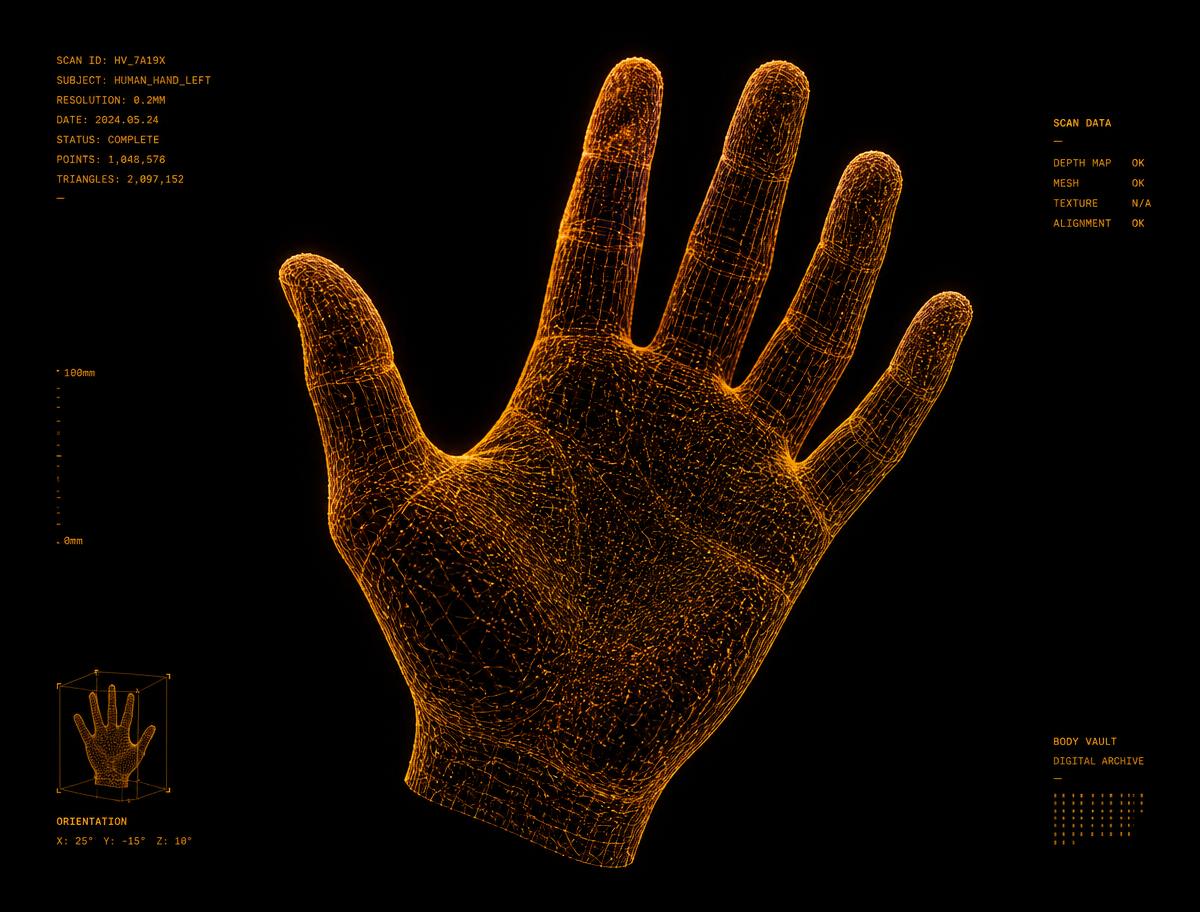
A biometric database that translates anatomical scans and movement deficiencies into bespoke 3D-printed ergonomic gear — grips, orthotics, bracing, and guards.
How It Works
01 · Capture
The athlete uploads movement footage or completes an on-site 3D anatomical scan.
02 · Analyze
The engine measures joint deviations, pressure points, and bar paths against elite baselines.
03 · Translate
The Vault stores the profile and outputs coaching cues plus parametric CAD files for custom equipment.
04 · Forge
Gear is printed, post-processed, and shipped or handed directly to the athlete.
Why It Works
Mass Customization
Generic athletic equipment ignores individual anatomical asymmetries and joint deviations. We don't.
Data-to-Product Lock-in
Athletes don't just get coaching cues — they get physical solutions engineered from their own scan data.
High Perceived Value
Parents and competitive athletes consistently pay a premium for injury prevention and ergonomic precision.
When It Works
In high-friction, equipment-heavy sports where grip, leverage, or joint protection directly dictate output — golf, lacrosse, powerlifting, racquet sports, and youth travel circuits — and positioned inside trusted athletic facilities where athletes can experience a scan in person.
When It Fails
Over-engineering software before hardware fit
Building an automated multi-camera CV pipeline before validating that athletes will actually pay for custom 3D gear.
Material fatigue
Standard PLA/PETG cracks under competitive athletic loads. We use engineering-grade TPU, carbon-fiber nylon, and SLS parts.